Showing posts with label rehabilitation. Show all posts

Sunday, September 3, 2023

Should Prosecutors Pursue Minor Crimes? (John Donvan; Open to Debate podcast)

In the United States, around 13 million misdemeanor cases are filed each year, which makes up about 80% of all cases that are processed. The district attorney’s offices in areas like Suffolk County, Massachusetts, and Manhattan have implemented new policies stating they would no longer prosecute certain low-level, nonviolent crimes —such as drug possession, disorderly conduct, shoplifting, prostitution, and certain other offenses — as long as they did not accompany felonies. 

The reasoning given is while ¾ of nonviolent misdemeanor cases don’t turn into convictions, this still permanently affects the person’s criminal record, job prospects, and ability to secure housing and these consequences are especially felt by people of color, people experiencing poverty, and LGBTQ people. Yet, those who argue “yes” to prosecuting minor crimes say it has important societal benefits. They argue that it is an essential way of keeping our communities safe and that not strengthening sentencing will let violent criminals back onto the street, fail to protect crime victims, and increase crime rates in cities. 

Those who argue “no” say it doesn’t work to deter criminals or to decrease the chance of committing other crimes, and it distracts from better solutions like rehabilitation or community service. They also point to recent studies that suggest prosecuting minor crimes, especially those from first-time offenders, actually increases crime.
Interview: 


Tuesday, September 6, 2022

American Rehab: Shadow Workforce (Reveal podcast)

Picture stepping into a drug rehab. You’re looking for treatment, but instead, you get hard work for no pay. For decades, this type of rehab has quietly spread across the country. How are rehabs allowed to do this?

Some organizations argue that participants can work without pay as long as they’re provided with housing and treatment. This issue was raised by a cultish organization that recruited dropouts from the hippie movement and had them sew bedazzled designer jean jackets. The clothes became a Hollywood fashion trend, and the unpaid labor propelled a case all the way to the Supreme Court.

The federal government doesn’t track work-based rehabs, so reporter Shoshana Walter spent a year counting them herself. She learned that work-based rehabs are present across the entire country. And the coronavirus pandemic has made the opioid epidemic even more deadly. As one crisis slams into another, we look at how work-based rehabs are turning participants into unpaid essential workers.
Interview: 


Sunday, April 25, 2021

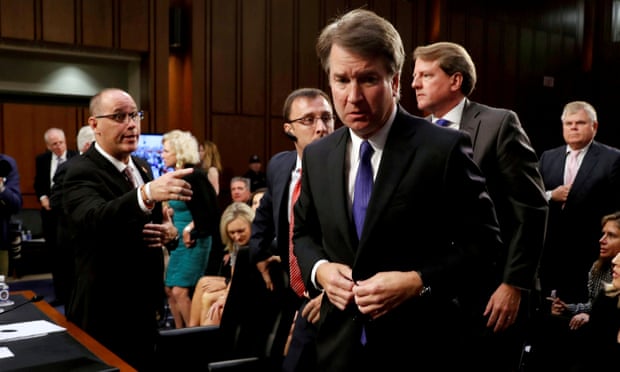
A question for Brett Kavanaugh: who gets a second chance? | Brett Kavanaugh | The Guardian

...Jones, let's remember, wasn't asking for much. He wasn't asking for a lifetime appointment on the supreme court. He wasn't even asking to be released. As Sotomayor noted, the only thing that he, and the almost 1,500 juvenile offenders serving life without parole sentences were asking for, was "the opportunity, at some point in their lives, to show a parole board all they have done to rehabilitate themselves and to ask for a second chance." Kavanaugh, the guy who wept angrily when people judged him for his past, decided that these people shouldn't get that opportunity...


Thursday, July 16, 2020

‘American Rehab’ And The Dark History of Rehabilitative Treatment (The 1A)

Across the nation, drug overdoses have spiked since the beginning of the coronavirus pandemic. While some states like Kentucky have worked for years to see a decrease in overdose deaths, experts say the pandemic has brought on a monthly increase to fatal and non-fatal overdoses since its outset. Although it could be months until more data is available, officials believe the increase in overdoses are a result of social isolation, economic turmoil, and a global disruption to the drug trade due to COVID-19.

But a new podcast explores rehabilitation facilities that exploit those who are seeking help. “American Rehab” by Reveal from the Center for Investigative Reporting and PRX, is a serial investigation three years in the making. It examines a system that exploits the vulnerable through a form of indentured servitude — sometimes with no counseling at all — and has roots in a bizarre cult from the 1950s.

We talk with the producers, reporters and a person who experienced one of these rehab facilities about how they use attendees for unpaid labor.
Interview:
https://the1a.org/segments/american-rehab-and-the-dark-history-of-rehabilitative-treatment/

Monday, July 13, 2020

At hundreds of rehabs, recovery means work without pay

For years, Richard Geiler struggled with alcoholism. A father of two who was always tinkering with cars, Geiler hoped one day to open his own auto repair shop, but he had never managed to stem his addiction. Finally, in middle age, he decided to try a uniquely American form of rehab....

Wednesday, February 26, 2020

Rehabilitation And Education In America’s Prisons (The 1A)

Today, an estimated 2.3 million people are incarcerated in the United States, making the U.S. number one on the list of countries with the highest prison populations.

About 95 out of every 100 incarcerated Americans will eventually be released. But the country’s recidivism rate remains one of the highest in the world – within five years of arrest, 76.6 percent of released prisoners are re-arrested.

Some prisons have turned to education as a form of rehabilitation. Over the years, programs like the Bard Prison Initiative have provided educational opportunities for inmates in an attempt to reduce recidivism.

According to the Institute for Higher Education Policy, the recidivism rate for prisoners who went through education programs was on average 46 percent lower than prisoners who didn’t take classes while incarcerated.

The need for education in prison is not falling on deaf ears. Several bipartisan initiatives in the Senate would free up federal Pell Grants for incarcerated citizens, and try to improve their overall quality of life. But will those measures succeed? And what is the state of education in prison without them?
Interview:
https://the1a.org/segments/rehabilitation-and-education-in-americas-prisons/

Wednesday, December 25, 2019

Knowledge & Redemption (Sam Harris, Making Sense podcast #176)

In this episode of the Making Sense podcast, Sam Harris speaks with Lynn Novick about her four-part documentary "College Behind Bars." The film follows the progress of students in the Bard Prison Initiative (BPI) as they pursue their undergraduate degrees. Sam and Lynn are joined by Jule Hall, a BPI graduate who served a 22-year sentence and is now working for the Ford Foundation.
Interview:
http://wakingup.libsyn.com/176-knowledge-redemption

Friday, February 23, 2018

Wednesday, February 14, 2018

Jeff Sessions' new budget: ramp up imprisonment and deportations, squeeze everything else

Having Jefferson Beauregard Sessions as the nation's top law enforcement officer continues to be exactly the wreck his critics warned it would be. As attorney general, his priorities are exactly what they were as longstanding racist senator: curtail civil rights, curtail voting rights, and refocus the nation's law enforcement on imprisoning as many Americans as possible with as little regard for expense or rehabilitation as possible...
https://www.dailykos.com/story/2018/2/13/1741028/-Jeff-Sessions-new-budget-ramp-up-imprisonment-and-deportations-squeeze-everything-else

Saturday, November 18, 2017

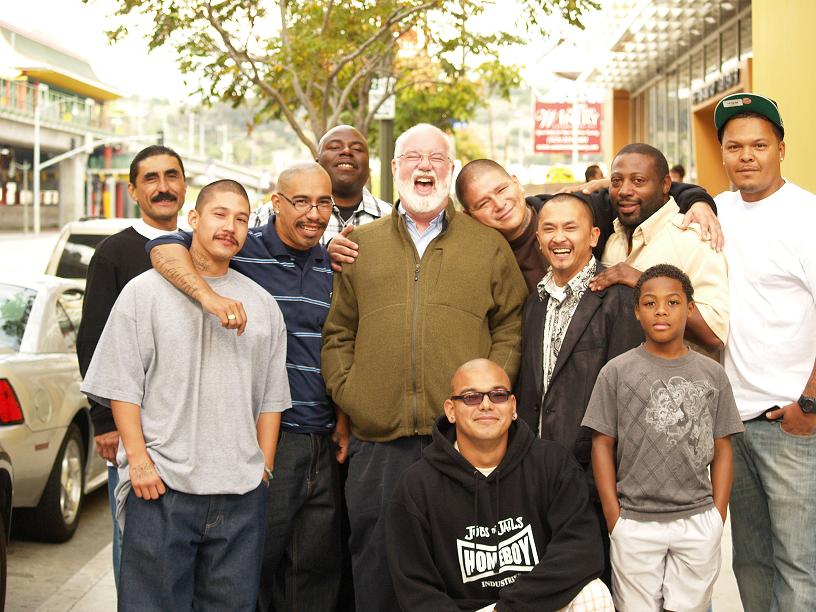
Priest Helps Former Gang Members Start New Lives (Terry Gross: Fresh Air)

Homeboy Industries founder Father Greg Boyle has spent 30 years working in LA with gang members and young people transitioning out of prison. His new book is ‘Barking to the Choir.’ Ken Tucker reviews ‘Reputation’ by Taylor Swift.
Interview:
https://www.npr.org/2017/11/13/563734736/priest-responds-to-gang-members-lethal-absence-of-hope-with-jobs-and-love

Saturday, April 22, 2017

Drug Treatment At Home Can Be More Effective And Cost Less Than Residential Rehab

Hannah Berkowitz is 20 years old. When she was a senior in high school her life flew off the rails. She was getting high on whatever drugs she could get her hands on. She was suicidal. Berkowitz moved into a therapeutic boarding school to get sober, but could only stay sober while she was on campus during the week....
http://www.npr.org/sections/health-shots/2017/04/17/523016186/home-based-drug-treatment-program-costs-less-and-works?ft=nprml&f=1001


Click Older Posts above to see more.