Happiness is a complex emotion and mental state, one that has been pondered since the times of the Ancient Greeks. Many have wondered what it means to be happy and to achieve happiness through either virtue or pleasure. Is it for the good of the individual or the benefit of society?
Those who believe virtue is the key to happiness argue that it is important for the well-being of both the individual and society, as touted by the Founding Fathers and the Stoics and inspired by Jeffrey Rosen's book "The Pursuit of Happiness", as one should strive for a life of moral virtue and rationality. Those who believe pleasure is the key to happiness see it as the maximization of pleasure and the minimization of pain. Quoting philosophers such as Epicurus and John Stuart Mill and touting Roger Crisp's "Reason and the Good", they also argue that everyone should have the liberty to define their sources of happiness and seek them as they see fit.
With this background in mind, we debate the question: The Pursuit of Happiness: Virtue or Pleasure?
Interview:
Showing posts with label philosophy. Show all posts
Showing posts with label philosophy. Show all posts
Sunday, July 26, 2026

Tuesday, June 16, 2026
LIVE DEBATE [God is Fiction] 3-16-2026 (Justin at DZ Debates on YouTube and podcast)
TIMESTAMPS
8:39 Skepticus joins
11:00 David - Philbro nonsense; What is Justin’s foundation for his view of the Bible; Contradiction in 1 Chronicles 21 & 2 Samuel 24
46:15 Joe Ja - Starts with fine tuning; Were the Israelites slaves to God?
1:21:43 VanTam - Caller talks non-stop; We have a creator because everything has one; Caller misunderstands infinity; Was time created? Justin gives caller 2 minutes to talk at the end of the call
2:06:50 RegularJohn - Caller believes in God because he sees patterns in people’s name; If you use your story for why God is real, why wouldn’t you trust the story of other people and their God?
2:24:20 Darth Mark [Agnostic] - Believes we live in a simulation; Caller believes they have precognitions that come true
2:49:35 Duke Tree - Christianity is true because of all the believers that have died for their faith; Is Genesis 3:15 a prophecy? What about other prophecies?
3:33:50 (Duke Tree) Is a choice by coercion an actual choice (follow God or burn forever?) Caller: yes, it is still a choice and Hell isn’t a lake of fire and torment
3:56:20 Alfie - What Christian scholars does Justin recommend?
4:01:40 Jared - Humans are the only creatures that say God isn’t real; Caller believes everyone knows God is real and non-believers are lying
4:22:00 James - How do atheists account for logic and knowledge? Is God contingent? How about Jesus?
4:46:15 (James) - Even if God isn’t real, living as if he is the best way to live your life; Are God’s morals objective?
5:10:29 Superchats and wrap-up GGs
46:15 Joe Ja - Starts with fine tuning; Were the Israelites slaves to God?
1:21:43 VanTam - Caller talks non-stop; We have a creator because everything has one; Caller misunderstands infinity; Was time created? Justin gives caller 2 minutes to talk at the end of the call
2:06:50 RegularJohn - Caller believes in God because he sees patterns in people’s name; If you use your story for why God is real, why wouldn’t you trust the story of other people and their God?
2:24:20 Darth Mark [Agnostic] - Believes we live in a simulation; Caller believes they have precognitions that come true
2:49:35 Duke Tree - Christianity is true because of all the believers that have died for their faith; Is Genesis 3:15 a prophecy? What about other prophecies?
3:33:50 (Duke Tree) Is a choice by coercion an actual choice (follow God or burn forever?) Caller: yes, it is still a choice and Hell isn’t a lake of fire and torment
3:56:20 Alfie - What Christian scholars does Justin recommend?
4:01:40 Jared - Humans are the only creatures that say God isn’t real; Caller believes everyone knows God is real and non-believers are lying
4:22:00 James - How do atheists account for logic and knowledge? Is God contingent? How about Jesus?
4:46:15 (James) - Even if God isn’t real, living as if he is the best way to live your life; Are God’s morals objective?
5:10:29 Superchats and wrap-up GGs
Interview:
- YouTube video, with viewer comments: https://www.youtube.com/live/ow-VuBA52j0?si=cTgFsajnCZRO5MS5
- Podcast, audio only: https://podcasts.apple.com/us/podcast/2026-03-16-fiction-atheist-live-debates/id1837730286?i=1000759287917
Friday, January 16, 2026
PROOF God Exists Using 3 Simple Arguments (Impact response) (Paulogia on YouTube)
Does God exist? Impact Ministries explores three compelling arguments for God's existence: the Creation Argument, the Design Argument, and the Moral Argument. Do these logical and philosophical perspectives provide strong reasons to believe in a higher power?
Interview:
Monday, October 6, 2025
Professor Dr. Derek McCallister comes to "destroy" me. Gets cooked instead. (DZ Debates -- YouTube)
Our "friend" @DrDerekMcAllister (Catholic philosopher) comes by to give his favorite argument for the existence of god. It's a rendition of the cosmological argument. W for being polite. L for using and old worn out argument that amounts to nothing better than a god-of-the-gaps. Extra W for making repeated videos insulting me when I'm not in the room and crying after getting cooked.
Interview:
Wednesday, February 26, 2025
Tuesday, January 21, 2025
Monday, January 13, 2025
Tuesday, December 3, 2024
Monday, December 2, 2024
Sunday, July 7, 2024
The Pursuit of Happiness: Virtue or Pleasure? (John DonvanOpen to Debate podcast)
Happiness is a complex emotion and mental state, one that has been pondered since the times of the Ancient Greeks. Many have wondered what it means to be happy and to achieve happiness through either virtue or pleasure. Is it for the good of the individual or the benefit of society?

Those who believe virtue is the key to happiness argue that it is important for the well-being of both the individual and society, as touted by the Founding Fathers and the Stoics and inspired by Jeffrey Rosen’s book “The Pursuit of Happiness”, as one should strive for a life of moral virtue and rationality.
Those who believe pleasure is the key to happiness see it as the maximization of pleasure and the minimization of pain. Quoting philosophers such as Epicurus and John Stuart Mill and touting Roger Crisp’s “Reason and the Good”, they also argue that everyone should have the liberty to define their sources of happiness and seek them as they see fit.
With this background in mind, we debate the question: The Pursuit of Happiness: Virtue or Pleasure?
Interview:
Wednesday, June 19, 2024
Lying About Atheists Will Make Them Christian! (Viced Rhino)
Today, Father Casey of Breaking in the Habit explains to us five reasons why Christians are leaving the church and becoming atheists. Shocker: He gets a lot wrong.
Interview:
Monday, October 30, 2023
Beyond The Bible: Where Else Can Wisdom Be Found?
Today's episode is a look at 10 other works of ancient wisdom literature. The bible has its books, but before, during, and after its creation, cultures worldwide wrote down wisdom that compares or surpasses that of a supposedly all-knowing god. Let's take a look!
Interview:
Sunday, February 5, 2023
Think yourself better: 10 rules of philosophy to live by | Philosophy books | The Guardian
From Aristotle to Iris Murdoch: what the greatest minds of the past 2,500 years have to tell us about the good life…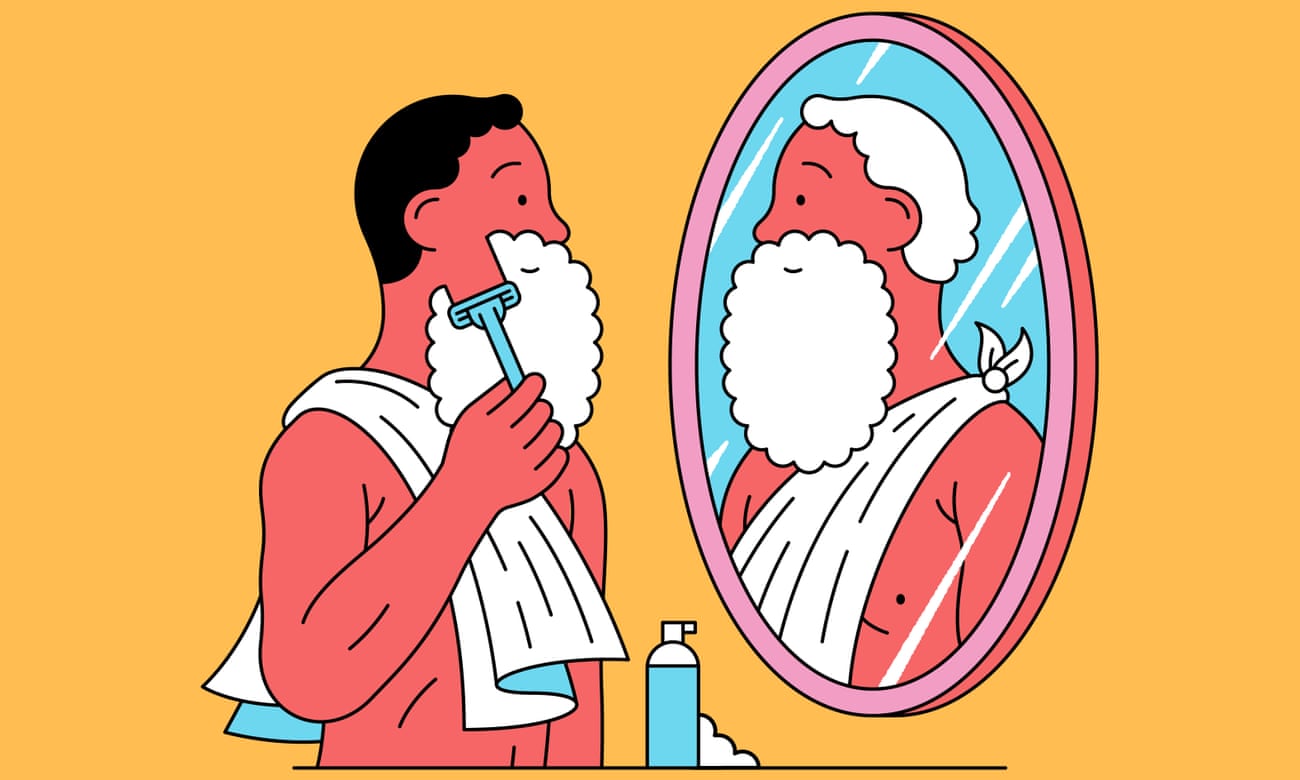
Monday, July 4, 2022
The Philosophers: Resisting despair (Vox Conversations podcast)
Sean Illing talks with author and professor Robert Zaretsky about the French philosopher, novelist, and journalist Albert Camus (1913–1960).

Though Camus might be best known for his novel The Stranger, Sean and Prof. Zaretsky explore the ideas contained in his philosophical essays "The Myth of Sisyphus," The Rebel, and in the allegorical novel The Plague, which saw a resurgence in interest over the past two years. They discuss the meaning of "the absurd," why one must imagine Sisyphus happy, and how the roots of mid-20th-century political nihilism (making sort of a comeback lately) can be found in one's relationship to abstract ideas.
This is the first episode of The Philosophers, a new series from Vox Conversations. Each episode will focus on a philosophical figure or school of thought from the past, and discuss how their ideas can help us make sense of our modern world and lives today.
Host: Sean Illing (@seanilling), Interviews writer, Vox Guest: Robert Zaretsky, author and professor, University of Houston Works by Camus: The Rebel (1951) ; The Stranger (1942) ; The Plague (1947) ; "The Myth of Sisyphus" (1942) ; "The Century of Fear" (in Neither Victims Nor Executioners; 1946) ; "The Human Crisis" (1946) ; The First Man (uncompleted manuscript, pub. 1960) Other References: "This is a time for solidarity" by Sean Illing (Vox; Mar. 15, 2020) "What Camus's The Plague can teach us about the Covid-19 pandemic" by Sean Illing (Vox; Jul. 22, 2020) A Life Worth Living: Albert Camus and the Quest for Meaning by Robert Zaretsky (Harvard University Press; 2016) Lo straniero, dir. by Luchino Visconti (Italian film adaptation of Camus's The Stranger; 1967 - English-dubbed version) Discourse on the Origin and Basis of Inequality Among Men, by Jean-Jacques Rousseau (1755; a.k.a. Rousseau's "Second Discourse") The Gay Science, by Friedrich Nietzsche (1882; passage on eternal recurrence: Bk. IV, sec. 341) Albert Camus's "The Human Crisis" read by Viggo Mortensen, 70 years later (Columbia University Maison Française; 2016)
Interview:
Sunday, June 19, 2022
End of the End of the Kalam? (feat. Matt Dillahunty) (William Lane Craig response)
A popular atheist declares the end of the Kalam. Dr. Craig has a response. And that atheist, Matt Dillahunty, joins me for a response to that response.
Interview:
Sunday, May 29, 2022
The Philosophers: Loneliness and totalitarianism (Sean Illing; Vox Conversations podcast
Sean Illing talks with professor Lyndsey Stonebridge about the philosopher Hannah Arendt, author of The Origins of Totalitarianism. Arendt might be best known for coining the phrase “the banality of evil” in her reporting on the trial of Adolf Eichmann in 1961, but in this episode Sean and Lyndsey discuss Arendt's insights into the roots of mass movements, how her flight from Nazi occupation shaped her worldview, and how loneliness and isolation — which abound in our world today — can prepare a population for an authoritarian turn. The Philosophers is a new monthly series from Vox Conversations. Each episode will focus on a philosophical figure or school of thought from the past, and discuss how their ideas can help us make sense of our modern world and lives today.
Host: Sean Illing (@seanilling), Interviews writer, Vox Guest: Lyndsey Stonebridge (@lyndseystonebri), author; professor of humanities and human rights, University of Birmingham Works by Hannah Arendt: The Origins of Totalitarianism (1951), with the inclusion of the chapter "Ideology and Terror" in 1953; Eichmann in Jerusalem (1963); The Human Condition (1958); "Home to Roost: A Bicentennial Address" (1975); "Personal Responsibility under Dictatorship" (1964) Other References: The Judicial Imagination: Writing After Nuremberg by Lyndsey Stonebridge (Edinburgh University Press; 2011) Placeless People: Writings, Rights, and Refugees by Lyndsey Stonebridge (Oxford; 2018) Thinking Like Hannah Arendt by Lyndsey Stonebridge (Jonathan Cape; forthcoming 2022) "A 1951 book about totalitarianism is flying off the shelves. Here's why" by Sean Illing (Vox; updated Jan. 30, 2019) "Where loneliness can lead" by Samantha Rose Hill (Aeon; Oct. 16, 2020) The Lonely Crowd by David Riesman (1950) Immanuel Kant, Groundwork for the Metaphysics of Morals (1785) for the "categorical imperative"
Interview:
Host: Sean Illing (@seanilling), Interviews writer, Vox Guest: Lyndsey Stonebridge (@lyndseystonebri), author; professor of humanities and human rights, University of Birmingham Works by Hannah Arendt: The Origins of Totalitarianism (1951), with the inclusion of the chapter "Ideology and Terror" in 1953; Eichmann in Jerusalem (1963); The Human Condition (1958); "Home to Roost: A Bicentennial Address" (1975); "Personal Responsibility under Dictatorship" (1964) Other References: The Judicial Imagination: Writing After Nuremberg by Lyndsey Stonebridge (Edinburgh University Press; 2011) Placeless People: Writings, Rights, and Refugees by Lyndsey Stonebridge (Oxford; 2018) Thinking Like Hannah Arendt by Lyndsey Stonebridge (Jonathan Cape; forthcoming 2022) "A 1951 book about totalitarianism is flying off the shelves. Here's why" by Sean Illing (Vox; updated Jan. 30, 2019) "Where loneliness can lead" by Samantha Rose Hill (Aeon; Oct. 16, 2020) The Lonely Crowd by David Riesman (1950) Immanuel Kant, Groundwork for the Metaphysics of Morals (1785) for the "categorical imperative"
Interview:
Tuesday, April 20, 2021
Thursday, December 31, 2020
Kant & Categorical Imperatives: Crash Course Philosophy #35
Our next stop on our tour of ethics is Kant’s ethics. Today Hank explains hypothetical and categorical imperatives, the universalizability principle, autonomy, and what it means to treat people as ends-in-themselves, rather than as mere means.
https://youtu.be/8bIys6JoEDw
https://youtu.be/8bIys6JoEDw
PHILOSOPHY: Immanuel Kant
Immanuel Kant was acutely aware of living in an age when philosophy would need to supplant the role once played by religion. This helped him to arrive at his most famous concept: the ‘categorical imperative.’
Sunday, May 3, 2020
The History of Philosophy (Dan Barker and Annie Laurie Gaylor, Freethought Radio)
We are preserving social distancing between state and church. FFRF attorney Sam Grover describes our recent free-speech victory against Texas Gov. Greg Abbott who removed our winter-solstice display from the state capitol. After hearing more comfort music — including Tom Lehrer's "Vatican Rag" — we talk with eminent British philosopher and author A.C. Grayling about his new books, The History of Philosophy and The Good State.
Interview:
https://www.stitcher.com/podcast/freethought-radio

Interview:
https://www.stitcher.com/podcast/freethought-radio
Subscribe to:
Posts (Atom)

Click Older Posts above to see more.