Health data appears to be most affected by administration’s attempt to wipe findings that don’t align with its priorities, tracker shows…
A database of federal law enforcement officer misconduct records. A survey measuring physical, sexual and emotional violence against children and youth. Real-time pollution readings collected by air quality monitors from US embassies around the world…
“We’re at a very vulnerable point as a nation,” said Denice Ross, former US chief data scientist under the Biden administration and a cofounder of dataindex.us. “We’re facing a future where we are not going to have the information that we need to make decisions that will save lives and benefit American communities.”…
“High temperatures can exacerbate certain medical problems that are common among older people and, more generally, ageing bodies find it harder to adapt to more extremes of heat and cold as we age.”…
0:00 Intro
1:34 Miss North Carolina USA said she lost her crown due to her faith. Then the racist posts surfaced.
10:55 Virginia school district sued after repeatedly changing rules to block LGBTQ student club.
23:10 School officials face charges after trans wrestler controversy fueled by the religious right.
35:15 An anti-trans Christian activist is furious that a reporter quoted her accurately.
43:00 Trump is trying to change childhood vaccine recommendations.
54:30 Oklahoma candidate James Taylor has turned his classroom into a Christian campaign studio. Interview:
Inflammation is an important and necessary part of the body’s healing process. It’s also long been a wellness buzzword used to sell products that do very little to treat it. This week, we look at inflammation through the lens of a new Mother Jones article, “The Great Inflammation Panic,” including an interview with the author, Julia Métraux, in segment two. We’ll also discuss what inflammation is, how wellness influencers weaponize it, and what it represents in the context of Ayurveda.
Dr. Anthony Fauci recently invoked the Fifth Amendment more than 100 times during a contentious Senate hearing about the COVID-19 pandemic. Does that suggest wrongdoing—or has one scientist become a convenient scapegoat for an extraordinarily complex global crisis?
In this episode of From Bench to Bedside, Dr. Melanie Matheu and Dr. Zachary Rubin examine Fauci’s scientific legacy, the mistakes made during the pandemic, and the difference between legitimate criticism and political theater.
We discuss:
• Why no single person controlled America’s pandemic response
• What public-health officials got wrong about masks and messaging
• The vaccine reactions Zach actually encountered in clinical practice
• Fauci’s complicated but consequential role during the HIV/AIDS crisis
• The evidence surrounding a laboratory leak versus natural spillover
• What gain-of-function research actually means
• Why lockdowns were intended to prevent hospitals from collapsing
• How social-media misinformation overwhelmed public-health communication
• What we should be learning before the next pandemic arrives
The COVID-19 response deserves serious, evidence-based scrutiny. But meaningful accountability requires examining the entire system—not blaming every national, state, local, hospital, school, and law-enforcement decision on one person.
*CHAPTERS*
00:00 – We’re back—and there is a lot to discuss
02:24 – Fauci’s Senate testimony and the Fifth Amendment
04:05 – Fauci’s background in science and medicine
06:55 – Pandemic decisions were a team effort
11:18 – The personal and emotional toll of COVID-19
13:38 – COVID vaccine adverse events explained
17:15 – Fauci, HIV/AIDS, and changing scientific evidence
21:10 – Masks, shortages, and failed public messaging
25:55 – The lab-leak hypothesis versus natural spillover
29:08 – What gain-of-function research actually means
33:35 – Why pandemic preparedness still matters
35:18 – Why hospitals overflowed and lockdowns occurred
38:02 – Social-media misinformation and collapsing trust
40:34 – The pandemic’s lasting impact on patients and clinicians
42:25 – What history should remember about the response
43:28 – Cyclospora and upcoming episodes
The administration declared in an interim final rule released last month that a diagnosis, even for a disease as grave as cancer, isn’t enough to claim an exemption from the 80-hour requirement, unless beneficiaries submit additional proof that they physically can’t work. Democratic attorneys general from 25 states and Washington, D.C. plan to argue the rule is both too strict, in not offering blanket exemptions to people with certain diseases, and too vague, in failing to guide states on how to determine who is too sick to work — and will ask the judge to block the stricter medical frailty policy...
“I’ve put a couple kids in the hospital, and they have been sick, but they recovered. … But here’s the thing: I’m a pioneer. And I’m going against the grain here. I’m climbing a mountain they say you can’t climb.”…
For decades, the Supplemental Nutrition Assistance Program Nutrition Education and Obesity Prevention Grant Program, known as SNAP-Ed, has funded programs such as community cooking classes, farmers markets in low-income neighborhoods, school nutrition lessons and more in every U.S. state. The program is a "pillar of the public health infrastructure in the US," according to a report published in the Journal of Nutrition Education and Behavior…
"It doesn't make sense when we have an administration [promoting] the Make America Healthy Again efforts that are focused on decreasing consumption of ultra-processed foods and wanting to encourage people to eat more fruits and vegetables," said Tashara Leak, a professor of nutritional sciences at Cornell University, "to then get rid of the largest federally funded nutrition education program that helps to achieve those goals."…
“The industry doesn’t want front-of-pack labelling because it’s a first step toward classifying the products for its healthiness or not, and then it gets easier to tax them, it gets easier to put bans on them for marketing and those types of things.”…
The Pentagon will screen the testosterone levels of soldiers 30 and up, Defense Secretary Pete Hegseth announced Wednesday, the department’s latest push in its efforts to refocus on service members’ fitness and “lethality.”…
With so much emphasis on global politics and the World Cup in recent weeks, we’re going to focus on the somewhat quieter but intensely important bureaucratic dismantling of expertise occurring in health and science.
First, Derek looks into a recent 412-page OMB proposal that hands political appointees veto power over federal science grants, effectively killing peer review, blocking research on health disparities, and walling off American scientists from the rest of the world. Matthew counters with Canada’s own corrosive behavior.
Then we dig into the contradiction of MAHA: the pro-health movement running cover for the EPA quietly approving new forever chemical pesticides mere days after the Supreme Court gutted Americans’ ability to sue Monsanto (by way of their parent company, Bayer). Again, there’s a Canadian parallel: Bill C-30 hands cabinet the power to override Health Canada’s own scientists and approve pesticides they’ve already ruled unsafe.
Finally, Julian removes gravity from the situation by covering congressional UAP hearings where unverified whistleblower claims about alien bodies and secret programs get treated with peer-reviewed science seriousness.
Only, as with everything else in Trump’s America, the science is thin and the theater, thick. Interview:
“I have no clue what is up with Mitch McConnell,” Kinzinger wrote. “I wish him good health. But I know this: he grew the alligator in the bathtub that eventually escaped. He could have ended Trump politically. In exchange he got a few more years of power… and a party of people who hate him and call his wife a Chinese spy. Hope it was worth it.”…
“At a time when many Americans are concerned about the impact of environmental toxins on their families’ health, public health authorities can’t afford to overlook the impact of vehicle pollution on mortality and respiratory health outcomes,” said Lingzhi Jin, a senior researcher at the International Council on Clean Transportation, in a statement…
Neurosurgeon Dr. Vivekanand Palavali joins us to examine how science unravels near-death and out-of-body experiences. Then, we hear from members of the Congressional Freethought Caucus who are pushing back against Christian nationalism and the false claim that America was founded as a Christian nation.
In this episode of From Bench to Bedside, Dr. Zachary Rubin and Dr. Melanie Matheu break down the latest Ebola outbreak, what makes this outbreak different, and why public health experts are paying close attention.
We discuss:
✅ What Ebola is and how it spreads
✅ Why this outbreak may be the largest on record
✅ Why Ebola is NOT airborne
✅ Symptoms and progression of Ebola virus disease
✅ Why delayed detection is such a major concern
✅ The role of vaccines, public health infrastructure, and global health funding
✅ U.S. involvement and international response efforts
✅ Common myths and misinformation about Ebola
✅ What individuals can do to support outbreak response
Our goal is to provide evidence-based information and context, not fear.
Subscribe for future episodes where science meets real-world medicine.
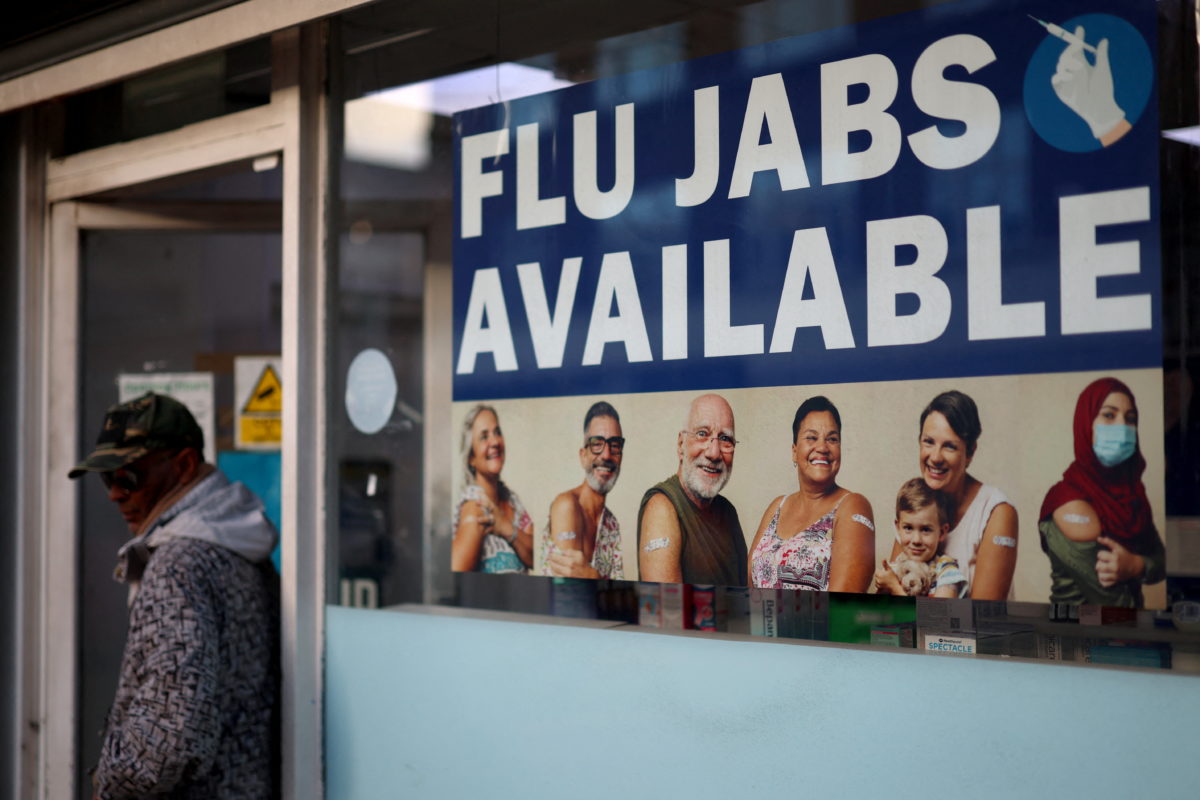
Tens of thousands of Americans die from influenza every year, and older adults are among the most vulnerable. There are various types of flu vaccines already available in the U.S., including three specifically recommended for people 65 and older. But vaccines made with the Nobel Prize-winning mRNA technology are faster to manufacture than other types — something experts say might help if the shape-shifting flu virus mutates in a way that requires suddenly brewing new doses to match.
"Having this technology available puts us in a better position to be prepared for emerging strains in the future," said Dr. Flor Munoz-Rivas of Texas Children's Hospital, one of FDA's advisers...
A controversy at the American Diabetes Association Scientific Sessions sparked national headlines after several prominent diabetes researchers were removed while distributing an editorial criticizing cuts and changes to U.S. biomedical research funding.
Dr. Zachary Rubin and Dr. Melanie Matheu discuss what happened, examine the editorial at the center of the controversy, and explore broader concerns about NIH funding, scientific independence, peer review, and the future of American research.
They also discuss how funding decisions today may impact patient care, medical innovation, and scientific progress for years to come. Interview:
At the 2026 American Diabetes Association Scientific Sessions, several prominent diabetes researchers—including current and former ADA leaders—were removed after distributing an editorial published in the ADA's own flagship journal.
In this episode of From Bench to Bedside, Dr. Zachary Rubin, MD, and Dr. Melanie Matheu, PhD, break down:
What happened at the ADA conference
Why researchers were handing out the editorial
The growing concerns about NIH funding and scientific independence
The proposed changes to federal grant review processes
Brain drain and the future of American biomedical research
The role of scientific advocacy in medicine
Why this controversy matters for patients, physicians, and researchers
This conversation goes beyond politics and focuses on a fundamental question:
What responsibility do scientists have to speak out when research is threatened?
📚 Editorial discussed:
"Misguided Brushes of a Pen Continue to Dismantle and Destroy Biomedical Research in the United States. We Can No Longer Afford Complacency and Fear. We Must All Act Now."
Subscribe for evidence-based discussions on medicine, science, public health, and healthcare policy.
00:00 Midwest storms, tornado warnings, and recording delays
02:05 Welcome to From Bench to Bedside
03:10 What happened at the ADA Scientific Sessions?
05:20 What scientific conferences are really like
07:35 The American Diabetes Association and its mission
08:55 Researchers removed while distributing an editorial
11:20 The editorial criticizing NIH funding cuts
14:10 Proposed changes to NIH grant review and peer review concerns
17:15 Brain drain and the future of U.S. biomedical research
19:30 Scientific advocacy versus politics
22:10 Was this really a protest?
24:05 Why research funding matters for patients
25:55 Final thoughts: Why scientists must speak up
27:05 Outro