https://www.youtube.com/watch?v=EXzYff5upG4
The US supreme court has ruled that Louisiana will have to redraw its congressional map, in a landmark decision that effectively guts a major section of the Voting Rights Act.
In a 6-3 decision along partisan lines, the court rendered ineffective section 2 of the Voting Rights Act, the last remaining powerful provision of the 1965 civil rights law that prevents racial discrimination in voting. Section 2 has long been used to ensure minority voters are treated fairly in redistricting...

https://www.theguardian.com/us-news/2026/apr/29/black-lawmakers-supreme-court-voting-rights-ruling

https://www.npr.org/2026/04/29/nx-s1-5754657/supreme-court-louisiana-redistricting
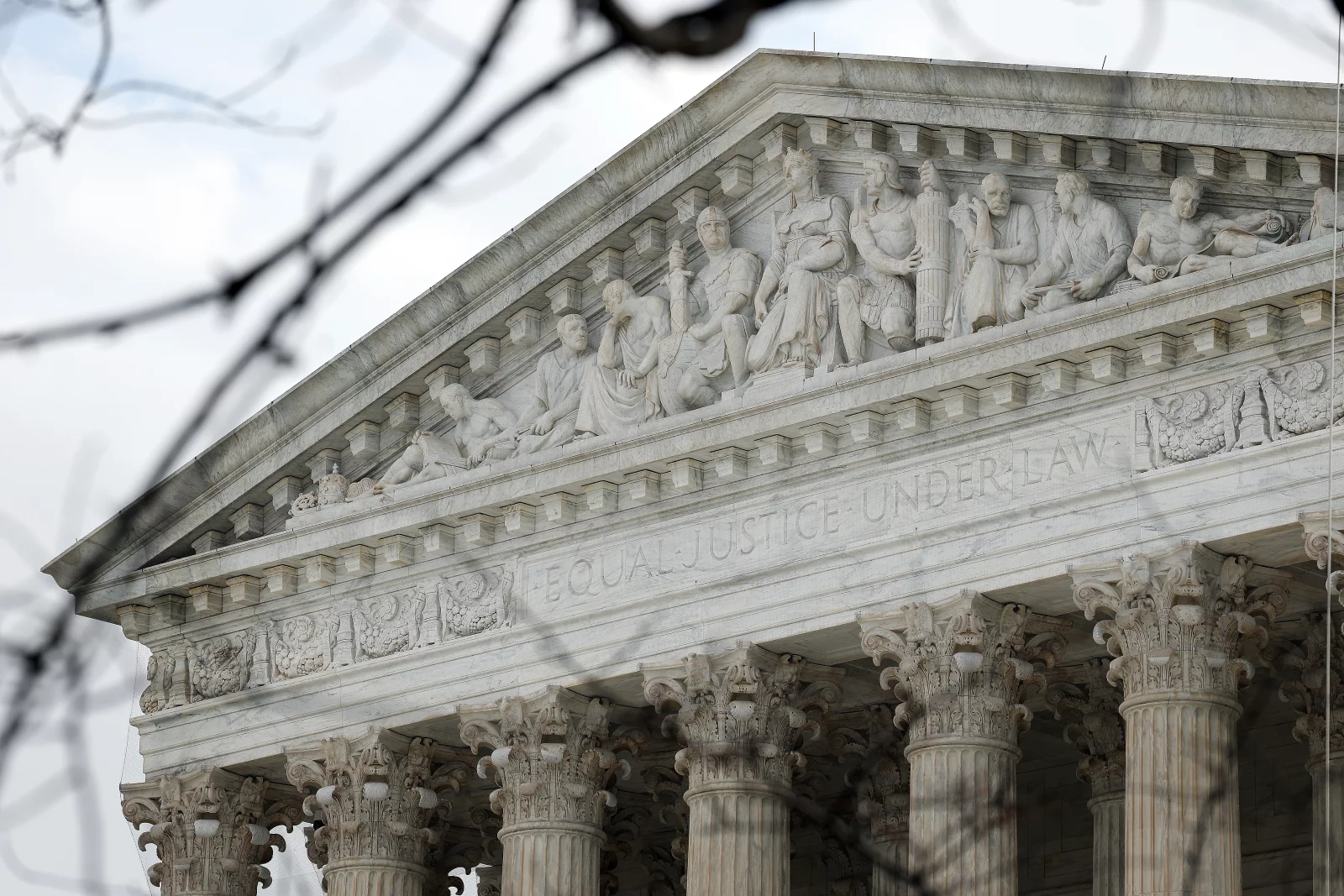
The guarantee of civil rights promised by the Civil Rights act of 1875 was short-lived.
Numerous White business owners simply ignored the law in the South, and to a degree, also in the North. Federal enforcement efforts were weak and inconsistent. The severe economic depression of 1873 drew people’s attention, and Northern Whites tired of the many Federal government interventions in the South.
Then in 1876, the Presidential election was close and the results disputed. As a compromise to settle the election, Republican Rutherford B. Hayes agreed to remove the last Federal troops from the South in exchange for dropping challenges to his being sworn in as President. Once the troops protecting civil rights were gone, a political coalition known as the Redeemers swung into action.
(Note: You may be accustomed to thinking of Democrats as pro-civil rights and Republicans as a party with a lot of white supremacists in their ranks. However, the opposite was true in the 1870’s; I point this out lest anyone be confused while reading the below paragraphs.)
The Redeemers comprised former White Southern Democrats — Confederates, wealthy planters, merchants, and others — who aimed to “redeem” the South by overthrowing Republican state governments, which were largely backed by freed Black people, Northern “carpetbaggers” and Southern “scalawags”. They sought to restore white supremacy, limit Black civil rights, and reestablish Democratic Party dominance. They pledged a return to pre-Civil War social order. Their legal tactics included poll taxes, literacy tests, and violence through paramilitary groups like the White League and Red Shirts. By 1877, Redeemers controlled nearly all Southern governments and went about passing Jim Crow and segregation laws.
As lawsuits were filed by Black people asserting their rights when barred from main floor seating in theaters, denied seats in the ladies section of a train, or refused hotel rooms, business owners asserted that the Federal government had no right to tell them what to do. When multiple such cases made their way to the Supreme Court, and consolidated as the Civil Rights Cases, the Court struck down as unconstitutional a substantial part of the the Civil Rights Act of 1875, saying it could be applied only to state actions, not those of private businesses or individuals.
The message to business owners was that they were free to discriminate. This paved the way for Jim Crow — a comprehensive system of laws and customs that mandated segregation and subjugation of Black Americans.
Read More:


In 1875, President Ulysses S. Grant signed into law the Civil Rights Act. It had two critical sections:
This meant that private business owners of public accommodations such as theaters, trains, hotels, and restaurants, could not legally refuse service to customers merely because they were Black. All commercial and social life access had to be offered without regard to skin color.
This meant that if a business owner discriminated against you, they could be found guilty of a misdemeanor, imprisoned for at least 30 days, pay a fine of at least $500 (a huge amount in 1875) — and pay you directly another $500 for each instance of discrimination.
This Civil Rights Act also prohibited racial discrimination in the selection of jury members, or the fact that they had dark skin or were previously enslaved. This was important because in the South, all-white juries habitually acquitted White defendants accused of crimes against Black citizens. A more impartial justice system was the intended outcome.
Read more: https://uslawexplained.com/civil_rights_act_of_1875
.svg.png)
In an opinion issued Tuesday, U.S. District Judge Hala Y. Jarbou, a Trump nominee, said the laws cited by the Justice Department in its complaint, including the Civil Rights Act of 1960, do not require the disclosure of the records it sought...
"The decision was about admissions practices, it did not say that diversity didn't matter or that diversity was unlawful," echoed Wiley, noting that what has been dubbed "DEI" is actually a diverse set of practices aiming to promote equity. "What this administration is doing essentially is taking one supreme court opinion about college admissions and trying to turn it into a sword against everything it doesn't like, whether it's lawful or not."
https://www.theguardian.com/us-news/2025/may/01/trump-administration-civil-rights-act