https://www.theguardian.com/environment/2026/sep/30/insects-ecosystems-conservation
Showing posts with label insects. Show all posts
Thursday, October 1, 2026
Insects play critical role in ecosystems beyond just providing food, new research shows
“We need to pay attention to insects and make their conservation a top priority, because conserving insects will benefit all the other species that rely on them. Insects are so much more than just food for vertebrates like birds and bats – they create and maintain habitat, provide protection to other species, help with reducing diseases and removing waste, and so many other ecosystem services that we, and other species, rely on. They really are the unsung heroes of the natural world,” she added…
Thursday, June 19, 2025
Insects are dying: here are 25 easy and effective ways you can help protect them
From turning out the lights to letting leaves rot, these small steps can create big changes at home or in the wild…
Thursday, September 8, 2022
US farmers face plague of pests as global heating raises soil temperatures
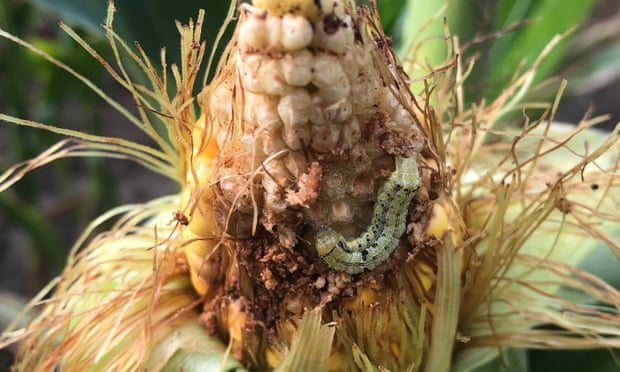
Milder winters could threaten crop yields as plant-eating insects spread northwards and become more voracious, researchers say…
Monday, February 28, 2022
The world's insect population is in decline — and that's bad news for humans (Terry Gross; Fresh Air podcast)
"The world, our surroundings, would be far quieter, far duller, far drabber without insects," he says. "When you start kind of digging down into these figures looking at the research, it's clear that there's something seriously amiss. ... There is a consistent decline in most insect populations, and that spells major trouble for them but also for us."
Interview:
Sunday, May 2, 2021
To help insects, make them welcome in your garden – here's how
… Entomologists have a recomendation: Dig up some fraction of your lawn and convert it into a meadow by replacing grass with native wildflowers...
Sunday, June 14, 2020
Spiky, hairy, shiny: LA abuzz with insect discoveries – in pictures
Since 2014, entomologists have sampled millions of insects around the city, identifying 800 species, including 47 new to science. The most striking of Los Angeles’ miniature inhabitants are showcased in an online exhibition of photographs taken using a special digital microscope ....
https://www.theguardian.com/environment/gallery/2020/jun/10/spiky-hairy-shiny-la-abuzz-with-new-insect-discoveries-in-pictures-aoe
Thursday, February 27, 2020
Welcome bugs into your yard. You might just save the world - The Washington Post
Without insects, we'd be doomed. It's time to make a happier home for them.....
https://www.washingtonpost.com/outlook/welcome-bugs-into-your-yard-you-might-just-save-the-world/2020/02/20/62b0a12c-4d18-11ea-b721-9f4cdc90bc1c_story.html
Sunday, February 23, 2020
Fates of humans and insects intertwined, warn scientists
Experts call for solutions to be enforced immediately to halt global population collapses ....
https://www.theguardian.com/environment/2020/feb/20/fates-humans-insects-intertwined-scientists-population-collapse
Friday, September 6, 2019
Germany banning use of a chemical in weedkiller in effort to protect its insects - The Hill
The German government announced Wednesday it would move forward with a plan to eliminate the use of glyphosate, the key chemical in the weedkiller Roundup, by the end of 2023.
https://thehill.com/policy/energy-environment/460184-germany-banning-use-of-a-chemical-in-weedkiller-in-effort-to
Wednesday, August 14, 2019
Insect 'apocalypse' in U.S. driven by 50x increase in toxic pesticides
America’s agricultural landscape is now 48 times more toxic to honeybees, and likely other insects, than it was 25 years ago, almost entirely due to widespread use of so-called neonicotinoid pesticides, according to a new study published today in the journal PLOS One.
https://www.nationalgeographic.com/environment/2019/08/insect-apocalypse-under-way-toxic-pesticides-agriculture/
Tuesday, July 16, 2019
Climate change is killing millions of plants and animals — and untold scientific discoveries in the process - The Hill
The loss of little-known plants and insects has real costs. Many of our most powerful medicines are derived from plants and insects.
https://thehill.com/opinion/energy-environment/452617-climate-change-is-killing-millions-of-plants-and-animals-and
Friday, July 5, 2019
Alabamans Are Battling Car-Sized Yellow Jacket Nests This Year - Gizmodo
The Alabama Cooperative Extension System has warned Alabama residents to watch out for "Volkswagen Beetle"-sized yellow jacket nests throughout the state, according to a news release.
https://gizmodo.com/alabamans-are-battling-car-sized-yellow-jacket-nests-th-1836013001
Sunday, March 31, 2019
Wednesday, February 20, 2019
Massive insect decline could have 'catastrophic' environmental impact, study says - CNN
Insect populations are declining dramatically worldwide due to pesticide use and other factors, with a potentially "catastrophic" effect on the planet, a study has warned. ....
https://www.cnn.com/2019/02/11/health/insect-decline-study-intl/index.html
Sunday, January 20, 2019
Insect collapse: ‘We are destroying our life support systems’
“We knew that something was amiss in the first couple days,” said Brad Lister. “We were driving into the forest and at the same time both Andres and I said: ‘Where are all the birds?’ There was nothing.”...
https://www.theguardian.com/environment/2019/jan/15/insect-collapse-we-are-destroying-our-life-support-systems?CMP=Share_iOSApp_Other
Monday, January 14, 2019
Would you eat insects to help save the planet? These companies are betting yes - The Washington Post
It’s the time when New Year’s resolutions have us on our best behavior. For some people, that’s January with no booze. For others it’s showing up at the gym. And for a growing number of people, it means eating insects.
What? Yes, insects. Why? Generally, people say they do it for their health and to try to save the planet.....
https://www.washingtonpost.com/lifestyle/2019/01/09/would-you-toss-roasted-insects-into-your-meal-this-health-app-is-betting-yes/
What? Yes, insects. Why? Generally, people say they do it for their health and to try to save the planet.....
https://www.washingtonpost.com/lifestyle/2019/01/09/would-you-toss-roasted-insects-into-your-meal-this-health-app-is-betting-yes/
Monday, November 26, 2018
This ‘wonder of the Earth’ is the size of Minnesota and built by bugs - The Washington Post
In Brazil, the insects built 200 million mounds of rock-hard dirt. ....
https://www.washingtonpost.com/science/2018/11/19/termites-built-natural-wonder-earth-size-minnesota/
Monday, February 26, 2018
Common Insects Face Growing Problems -- Truthdig
Earth's largest animal group faces a new threat. Bugs—not just rare species, but common ones too—may become less genetically diverse. ...
https://www.truthdig.com/articles/common-insects-face-growing-problems/
Thursday, February 8, 2018
Wednesday, October 25, 2017
Stark decline in German insect population points to potential ecological disaster -- The Atlantic
In western Germany, populations of flying insects have fallen by around 80 percent in the last three decades. ....
https://www.theatlantic.com/science/archive/2017/10/oh-no/543390/
Subscribe to:
Posts (Atom)