https://www.theguardian.com/environment/2026/may/17/north-america-bees-early-swarm-season
Showing posts with label bees. Show all posts
Monday, May 18, 2026
Experts sound alarm as North America’s bees start swarm season unusually early
“If we are seeing all of a sudden … [that] the bees are laying eggs all year round because the climate is warming, and they are swarming earlier because of it, then this may also point to varroa mites reproducing at unprecedented rates … It will be interesting to look at how this early season connects to this year’s winter losses,” he said...
Tuesday, September 3, 2024
Fewer bees and other pollinating insects lead to shrinking crops
Many plants, from crops to carnations, cannot bear fruit or reproduce without bees, beetles, butterflies and other insects to pollinate them. But the population of insect pollinators is dropping in the U.S., due in part to pesticides, climate change, invasive plants and diminished habitats. Rachel Mallinger, assistant professor of entomology at the University of Florida, explains why these insects are in decline and how homeowners can create yards and gardens that are good for pollinators...
Tuesday, August 22, 2023
The Beekeepers Who Don’t Want You to Buy More Bees - The New York Times
While techniques for nurturing hives have improved, honey bees remain vulnerable animals. As of a few years ago, nearly 30 percent of commercial honey bees still did not survive the winter months, says the Environmental Protection Agency. That's a large number and one that puts a financial strain on commercial beekeepers.
"But that's an agriculture story, not a conservation story," Mr. Black said. "There are now more honey bees on the planet than there have ever been in human history."
Figures from the Food and Agriculture Organization of the United Nations underscore the point. The number of beehives around the world has risen by nearly 26 percent in the last decade, to 102 million from 81 million.
Friday, November 26, 2021
Saturday, November 13, 2021
Sound the alarm: bees ‘scream’ when murder hornets attack, study finds | Bees | The Guardian
Royal Society Open Science research finds bees release 'rallying call for collective defence' that is 'quite harsh and noisy'…
Saturday, October 16, 2021
American bumblebees disappeared from 8 states, face extinction
…The loss of the insect could cause serious repercussions to the environment and crop production due to them being essential pollinators in agriculture…
https://www.usatoday.com/story/news/nation/2021/10/14/american-bumble-bees-disappeared-8-states-face-extinction/8448637002/
Saturday, April 3, 2021
If I Hadn't Caught It On Camera You Wouldn't Have Believed Me - YouTube
Another awesome day in North Alabama today friends. After really rough day yesterday, with tornadoes running all through the state, we are out catching a huge honeybee swarm from a cedar tree.
I can't believe it myself that this is the second swarm I've caught so far and both queens were captured before I ever shook the branch. This is really making swarm catching fun.
I hope you all are enjoying my 2021 Bee season kickoff with these swarm shakes. I sure am. I believe it puts me ahead of my buddy's Jpthebeeman, 628DirtRooster and Jeff Horchoff. Although I know they will catch up quick, it's nice to lead the race at some point.
Enjoy everyone and I hope you enjoyed a little fun from Yappybeeman.
Saturday, May 9, 2020
The Way Japanese Bees Kill Murder Hornets is Terrifying and Impressive
In a video posted by Twitter user Brandon Morse, the murder hornets, officially known as Asian giant hornets, are shown being lured into honeybee hive. After entering the hive, the hornet attacks one honeybee, sparking the rest of the hive to attack the hornet. While the hornets may be much bigger in size compared to the Japanese honeybees, the large number of bees in the hive allows them to gain the advantage and defeat the hornet.
https://www.newsweek.com/way-japanese-bees-kill-murder-hornets-terrifying-impressive-1502382
Tuesday, May 5, 2020
'Murder hornets' in Washington state threaten bees and whip up media swarm
Researchers and citizens in Washington state are on a careful hunt for invasive “murder hornets”, after the insect made its first appearance in the US.
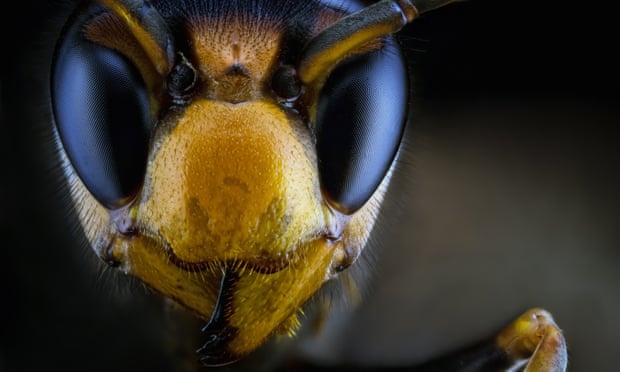
The Asian giant hornet is the world’s largest and can kill humans. But it is most dangerous for the European honeybee, which is defenseless in the face of the hornet’s spiky mandibles, long stinger and potent venom....
https://www.theguardian.com/environment/2020/may/02/murder-hornets-washington-state-bees-twitter
Wednesday, February 12, 2020
Bumblebees are dying across North America and Europe as the climate warms, scientists say - The Washington Post
New research ties a nearly 50 percent decline in North America to worsening climate extremes, and especially extreme heat.....
https://www.washingtonpost.com/climate-environment/2020/02/06/bumblebees-are-vanishing-scientists-blame-climate-change/
Saturday, March 9, 2019
Hello, hive mind: Bees can do basic arithmetic, a new study finds - The Washington Post
The oval-shaped brain of a honeybee is roughly the size of a single sesame seed. It contains fewer than 1 million neurons, while the human brain contains 100 billion.
A team of entomologists is asking what all those extra nerve cells are good for after finding that bees can do the kind of fundamental mathematics once thought to distinguish humans and the primate animals they most closely resemble...
https://www.washingtonpost.com/nation/2019/02/26/hello-hive-mind-bees-can-do-basic-arithmetic-new-study-finds/
Friday, February 22, 2019
EPA issued 'emergency' approval to spray 16 million acres with bee-killing pesticide - Daily Kos
Sulfoxaflor is a systemic insecticide that works by destroying the nervous system. Insects exposed go into tremors, then spasms, then death. Unfortunately, insects exposed means essentially all insects, including bees. In fact, sulfoxaflor is particularly hard on pollinators. That's why in 2016 the Ninth Circuit Court overruled the EPA's approval of the pesticide...
https://www.dailykos.com/stories/1836065
Sunday, February 10, 2019
Culprit found for honeybee deaths in almond groves
It’s about time for the annual mass migration of honeybees to California, and new research is helping lower the chances the pollinators and their offspring will die while they’re visiting the West Coast.
https://news.osu.edu/culprit-found-for-honeybee-deaths-in-almond-groves/
Saturday, January 26, 2019
Plants May Not Have Ears, But They Can 'Hear' Way Better Than We Thought
The flowers are listening, according to new research – well, in a sense, at least.
Scientists have found evidence that plants can actually hear the buzz of passing bees and produce sweeter nectar in response to entice the flying insects in. And flowers are technically their 'ears'...
https://www.sciencealert.com/flowers-may-not-have-ears-but-they-can-still-technically-hear-say-scientists
Monday, August 6, 2018
Why We Need Bees (Anthony Brooks, On Point)
What’s the buzz? We’ll look at the wonders of bees and worries they’re at risk of disappearing.
Interview:
http://www.wbur.org/onpoint/2018/08/01/bees-buzz-thor-hanson
Interview:
http://www.wbur.org/onpoint/2018/08/01/bees-buzz-thor-hanson
Wednesday, October 11, 2017
Mother Jones: Scientists Found a Gnarly Pesticide in 75 Percent of Global Honey Samples
The last taste of honey you enjoyed likely came from bees exposed to neonicotinoids, the world's most widely used class of insecticides. Scientists found traces of the bug-killing chemicals in 86 percent of the samples from North America.....
http://www.motherjones.com/environment/2017/10/scientists-found-a-gnarly-pesticide-in-75-percent-of-global-honey-samples/
Wednesday, August 23, 2017
Pesticides could wipe out bumblebee populations, study shows -- the guardian
Neonicotinoid drastically cuts egg-laying by queens, affecting their ability to start new colonies and increasing chances of local extinction, say scientists ....
https://www.theguardian.com/environment/2017/aug/14/pesticides-could-wipe-out-bumblebee-populations-study-shows
Sunday, July 9, 2017
From the wing of a wasp, scientists discover a new beer-making yeast - YouTube
If you enjoy a beer on a summer day, you can thank yeast, the microbes that ferment sugar into alcohol and give beer its character. After innumerable generations of using just two types of yeast, a lab in North Carolina has discovered a new yeast that produces a variety of flavors, and it comes from the weirdest source: bees. Science producer Nsikan Akpan reveals what the buzz is all about....
https://www.youtube.com/watch?v=MP8SmmgJ6VU
Thursday, April 27, 2017
20 Popular Foods We May Lose If Bee Populations Continue to Decline
Hundreds of North American bee species are in decline due to pesticides and habitat loss, putting the food supply at risk....
http://www.alternet.org/environment/20-popular-foods-we-may-lose-if-bee-populations-continue-decline
Thursday, February 16, 2017
Now Trump's Going After the Bumblebees
The administration just delayed endangered status for a bumblebee species that's on the brink of extinction.....
http://www.motherjones.com/environment/2017/02/trump-bumble-bees-neonics-enadangered
Subscribe to:
Posts (Atom)